Home / Journal / Sync Licensing for Trailer Music
Licensing

How Sync Licensing Works for Trailer Music: A 2026 Composer's Guide

By Tonal Chaos Editorial May 3, 2026 9 min read
Music producer working in a modern recording studio with equipment and monitors
The composer's chair: where every sync-licensed trailer track begins. Photo: RDNE Stock project via Pexels.

Every cinematic trailer you've ever seen was built on sync licensing. The Marvel teaser that gave you chills, the Netflix prestige drama promo that hooked you in fifteen seconds, the streaming originals flooding your feed. The composers who scored those moments weren't lucky. They understood the licensing machinery behind their craft, prepared their catalogs to fit it, and pitched at the right time to the right people.

This guide breaks down how sync licensing actually works in the trailer music world in 2026. What gets paid, who pays, who's involved in the chain, and what composers need to have ready before pitching a single trailer house.

What Sync Licensing Actually Means

At its simplest, sync licensing is granting permission to "synchronize" a piece of music with visual media. That could be a film trailer, a TV show, a commercial, a video game, a corporate explainer, or a YouTube creator's vlog. The license covers the right to pair audio with picture for a specific use, in a specific territory, for a specific period of time.

Two ownership stakes are licensed every time:

  • The composition. The song itself (melody, lyrics, structure), typically owned by the songwriter and their publisher.
  • The master recording. The specific performance you hear, typically owned by the artist, their label, or their production company.

In trailer music, the same person or library often controls both. When master and composition are owned by one entity, the licensing process moves fast. When they're split between an artist and a label, it can take weeks of legal back-and-forth, which is one reason trailer editors often default to library music with simpler ownership structures.

How Sync Licensing Works for Trailer Music Specifically

Trailer music sits in a unique corner of the sync licensing world. It's almost always:

  • Pre-cleared. Trailer houses don't have time to negotiate from scratch on a 72-hour deadline. They want music they can drop into their timeline and license fast.
  • Buyout-structured. Most trailer placements are flat-fee one-time payments rather than ongoing royalties. The fee covers the trailer's entire promotional run.
  • Stems-required. Trailer editors need stems (separated drums, brass, strings, synths, and vocals) so they can rebuild the track to fit picture. A composer who only delivers a stereo mix gets passed over.
  • Multi-deliverable. A complete trailer music package includes the full mix, the instrumental, the underscore, the stems, and pre-cut 30-second and 60-second edits.

This is dramatically different from how sync licensing works for, say, an episode of prestige TV drama. There, a song might be placed in a single scene, generate a sync fee plus ongoing performance royalties through ASCAP or BMI every time the episode airs. In trailer placements, performance royalties are negligible. Trailers don't broadcast traditionally, so they generate almost nothing through your PRO. The sync fee is the entire payout.

For more on the difference between trailer placements and broader sync licensing workflows, our complete guide to licensing trailer music covers the full process from rough cut to final delivery.

What Trailer Music Sync Placements Actually Pay

Specific 2026 ranges for trailer music sync fees, based on the actual market:

  • Major studio theatrical trailers (Marvel, Disney, Warner Bros): $5,000 to $50,000+ per song placement, all-in buyout
  • Streaming originals (Netflix, Apple TV+, Amazon): $2,500 to $15,000 per placement
  • Mid-tier theatrical and indie features: $1,500 to $7,500 per placement
  • AAA video game trailers: $3,000 to $15,000 per placement
  • Network TV promos: $1,500 to $8,000 per placement
  • Brand campaign anthems and spot promos: $5,000 to $25,000+ depending on brand size and territory

These are buyouts. No backend royalties. The fee covers the trailer's entire promotional run. Typically six months for theatrical, often perpetuity for streaming.

For a deeper, realistic breakdown of sync fees across all media types (not just trailers), the team at DropCue published a thorough guide to sync licensing rates by project type. Their numbers cover commercials, network TV, streaming, indie film, and games, and they're a useful reference for composers trying to model what a diversified sync income actually looks like.
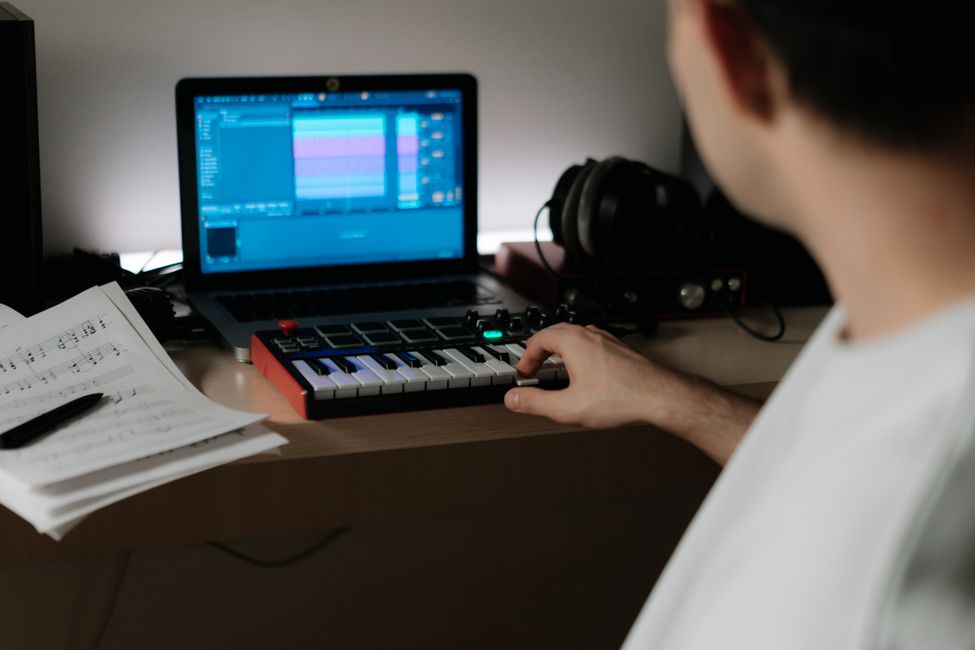
Music producer composing in a home studio with synthesizer and laptop
The composer's side: building a catalog ready for trailer placements. Photo: cottonbro studio via Pexels.

Who's Involved in a Trailer Music Sync Placement

The chain looks like this:

  1. The studio releases a film, series, or game and hires a trailer house to cut the trailer.
  2. The trailer house assigns a creative team that includes the director, editor, and music supervisor or coordinator.
  3. The music supervisor sources potential music, pulling from library relationships and pitched submissions.
  4. The composer or library delivers the final tracks, stems, and edits.
  5. Legal clears the licensing paperwork on both the composition and master sides.
  6. The trailer house delivers the finished trailer back to the studio.

Most composers never deal with the studio directly. The relationship that matters is with the trailer house, specifically the music supervisor or coordinator who searches for and selects music. Building those relationships is the entire game in trailer music sync.

The Workflow From Composer to Placement

Here is how a placement actually happens, end to end:

  1. You build a catalog. 50+ tracks minimum, organized by mood and energy, with full metadata, stems, and pre-cut edits available on every track.
  2. You build relationships. Pitch trailer houses, music supervisors, and indie sync agencies. Some sign you. Some say no. Some go silent.
  3. A brief arrives. A music supervisor sends a brief: "epic hybrid build, 60 seconds, lands hard at 0:45, dark sci-fi tone."
  4. You respond fast. Within 24 hours you send a curated playlist of five to ten tracks that match the brief, with section notes explaining why each track fits.
  5. Tracks get auditioned. The supervisor and editor cut your tracks against picture. Maybe one fits, maybe none do, maybe they ask for an alt mix or a custom edit.
  6. Negotiation. If a track works, the trailer house contacts you about licensing. Fee, territory, term, and exclusivity all get specified.
  7. Paperwork. You sign the deal memo. License executes.
  8. Delivery. Final WAV files, stems, and edits get sent. Track goes into the trailer.
  9. Payment. Sync fee arrives within 30 to 90 days.

The composers who place consistently are not necessarily the most talented. They are the ones who treat this nine-step workflow as a repeatable business process, not a creative whim.

What Composers Need Ready Before Pitching

Before you pitch a single trailer house, your house needs to be in order:

  • A pitchable catalog of at least 50 tracks (more is better), organized by mood, intensity, and genre, with consistent metadata across every track
  • Complete deliverables on every track: full mix, instrumental, underscore, stems, pre-cut 30-second and 60-second edits
  • A professional pitch presentation: branded share links with metadata, not bare WeTransfer dumps
  • Per-recipient analytics. Knowing which tracks a supervisor played, replayed, and downloaded turns blind pitching into informed follow-ups
  • Cleared rights on every track: 100% confirmed, all splits documented, no ambiguity about ownership

Most composers handle the first two well. They fall apart on presentation and follow-up. Sending a 200-track Dropbox folder with no metadata and no analytics is exactly the move that gets submissions auto-archived.

This is where modern music catalog software like DropCue makes a difference. It lets composers organize their full deliverables (parent track plus nested alts, stems, and edits, all in one expandable view), send branded share links to trailer houses, and see exactly which tracks the supervisor engaged with. When a follow-up email references the specific track the supervisor spent two minutes on, response rates are significantly higher than generic "checking in" notes.

For more on what supervisors actually look for during the search process, our guide on how music supervisors choose the perfect trailer track breaks down the evaluation criteria from the supervisor's side of the table.

What's Changing in 2026

Three industry shifts every trailer composer should know:

  • Streaming has compressed timelines. Studios announce trailers later in the production cycle and want them faster. The window from brief to placement is now days, not weeks. Composers who can respond inside 24 hours win.
  • Stems and alts are mandatory. Every major trailer house in 2026 expects stem deliveries. Composers who only ship stereo masters get filtered out before being heard.
  • Analytics are reshaping how composers follow up. The old "just checking in" email is dead. Composers using catalog tools with engagement data send precise, informed follow-ups that reference the specific tracks supervisors actually played.

What This Means for Your Career

If you are a composer trying to break into trailer music, sync licensing is not a mystery. It is a system. Understand how the licensing chain works, prepare your catalog professionally, build relationships with trailer houses, and present your work in a way that respects the supervisor's time.

The composers placing tracks in major theatrical campaigns aren't more talented than the ones who don't. They are more prepared, more responsive, and more strategic about how they pitch. Sync licensing rewards composers who treat it like the business it actually is.

Ready to License Trailer Music?

Browse the Tonal Chaos catalog of premium trailer music. Pre-cleared, fully delivered with stems and edits, and ready to license for your next campaign.

Related Articles